







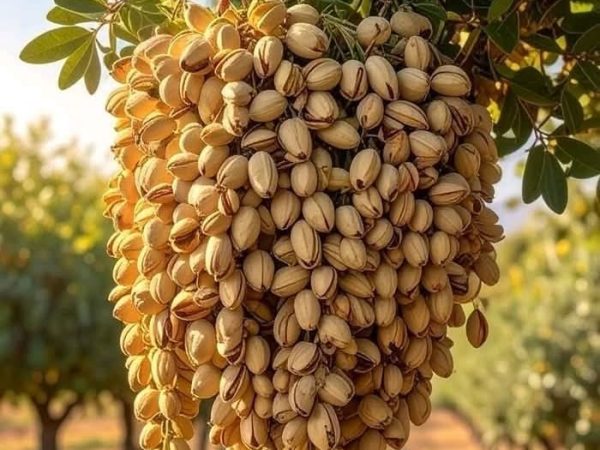
Pistachios are one of the most important horticultural and cash crops in Iran, and their quality and yield are directly related to nutritional management. Among the nutrients required by pistachio trees, potassium (K) has a special place, and many plant nutritionists refer to it as a "quality and yield element."
Pistachio trees have a significant need for potassium due to their high production of fruit, nuts, and dry matter. A deficiency of this element can cause reduced growth, yield loss, hollow seeds, reduced pistachio nut quality, and increased susceptibility of the tree to environmental stresses.
Given the climatic conditions of many pistachio-growing regions in Iran and the presence of stressors such as drought, salinity, and extreme heat, the proper management of potassium fertilizer application plays a decisive role in maintaining tree health and increasing economic production.
In this article, we will fully examine the role of potassium in pistachio trees, symptoms of deficiency, the best time to use it, types of potash fertilizers, and methods of application.
The Importance of Potassium in Pistachio Tree Nutrition
Potassium is one of the three main elements required by plants, along with nitrogen and phosphorus. These elements do not enter the structure of organic compounds of the plant like some other elements, but they play a very important role in hundreds of enzymatic reactions and physical processes. In the pistachio tree, potassium is one of the key elements for optimal growth and performance and plays a direct role in many vital plant activities. Including the transport of sugars and carbohydrates within the plant, the formation and filling of the pistachio kernel, regulating the water structure in plant tissues, increasing resistance to drought and salinity stress, improving crop quality, and also increasing the weight and filling of seeds. For this reason, pistachio trees need potassium more than many other garden crops and can have a direct effect on the yield and final quality of the product.
The role of potassium in increasing pistachio yield
A significant portion of Iran's pistachio orchards are located in arid and semi-arid regions. In such conditions, potassium plays a key role in increasing the tree's tolerance to drought, water scarcity, extreme heat, and salinity of soil and irrigation water. By regulating the opening and closing of stomata, this element helps the plant manage water consumption better, and as a result, the tree's water use efficiency increases.
The effect of potassium on the quality of pistachio kernels
The marketability of pistachios depends largely on the quality of the kernel. Adequate potassium intake can significantly affect this quality; in such a way that the natural browning of the pistachio increases, the color of the kernel improves, the percentage of kernel increases, the taste of the product improves, and ultimately the weight of the kernel increases. The result of these changes is a product of higher quality and greater economic value for the gardener.
The role of potassium in coping with environmental stresses
A significant portion of Iran's pistachio orchards are located in arid and semi-arid regions. In such conditions, potassium plays a key role in increasing the tree's tolerance to drought, water scarcity, extreme heat, and salinity of soil and irrigation water. By regulating the opening and closing of stomata, this element helps the plant manage water consumption better, and as a result, the tree's water use efficiency increases.
این مجموعه را با استانداردهای بینالمللی و تأییدیههای معتبر از نهاده پخش پارس پویا تهیه کنید.
مشاهده همه محصولات


Symptoms of potassium deficiency in pistachio trees
Early detection of potassium deficiency can prevent serious economic losses. The most important symptoms of this deficiency include yellowing of the leaf margins, which usually starts with older leaves, then as the deficiency progresses, the leaf edges become scorched and turn brown and dry. In these conditions, branch growth is also limited and the tree performs weaker in terms of growth. On the other hand, its effect is also clearly seen in the final product; increased seed hollowness is one of the important signs of potassium deficiency in pistachio orchards, along with a decrease in the percentage of sprouting and a decrease in the quality of the kernel. Ultimately, the weight of the kernel also decreases and the total economic value of the product decreases.
Factors affecting potassium deficiency in pistachio orchards
A potassium deficiency does not always mean that the soil is truly deficient in this element. Sometimes the problem lies elsewhere and the plant is unable to effectively absorb the available potassium.
Some of the major factors that contribute to this include high salinity, calcareous soil, excessive calcium or magnesium application, improper soil pH, and even weak root systems. Any of these can impair potassium uptake, even when the amount in the soil is not bad.
Therefore, relying on guesswork and the appearance of the tree is not enough. Soil and leaf testing helps us understand exactly where the story is coming from and avoid making wrong nutritional decisions.
Guide to potassium fertilizer use in pistachio orchards
The timing of potassium consumption plays a very important role in its effectiveness, and if not chosen correctly, even proper consumption will not yield ideal results.
After harvest is one of the most important times to apply potash fertilizers. During this period, the tree begins to rebuild its food reserves, prepares itself for the next season, and at the same time, flower buds are strengthened; in other words, the foundation for next year's yield is practically formed here.
Late winter, before growth begins, is another important time. During this time, potassium has a chance to become available to the roots and be more effectively absorbed as active growth begins.
The stage of kernel formation and filling, however, marks the peak of the tree's requirements. Adequate potassium intake during this period yields directly observable results: improved kernel filling, increased kernel weight, and a reduction in empty shells.
دربارهی تغذیه گیاه، انتخاب کود و سموم یا برنامهی مصرف سؤال دارید؟ کارشناسان ما بدون هزینه شما را راهنمایی میکنند.
Types of potash fertilizers suitable for pistachios
Potassium sulfate is one of the most popular and widely used potash fertilizers in pistachio orchards. The main reason for this choice is the combination of its functional properties; this fertilizer is chlorine-free, works well on saline soils, provides sulfur to the plant, and is safe for the roots. For this reason, it is considered the first choice of experts for pistachios in many nutritional programs.
Potassium nitrate is another type of potash fertilizer known for its rapid absorption. In addition to potassium, this fertilizer also provides nitrogen and is mostly used in situations where a rapid plant response is needed, such as foliar spraying or active growth stages, as it has both good absorption and can enhance growth and yield.
Monopotassium phosphate (MKP) is a combination of potassium and phosphorus, primarily used when the plant enters its reproductive phase. This fertilizer is particularly effective for foliar application, helping to improve flowering and enhance fruit set.
In addition, there are liquid potassium fertilizers, which are used during critical growth stages due to their high absorption rate. These types of fertilizers are a good option for foliar spraying as well as pressurized irrigation systems and perform well in situations where the plant needs potassium urgently.
Methods of using potash fertilizer in the pistachio orchard
Soil application is the most common method of applying potash fertilizers. In this method, the fertilizer is placed in the root development zone so that it is gradually available to the plant throughout the growing season. This method is considered one of the main pillars of nutrition management in pistachio orchards due to its high persistence, gradual supply of potassium, and compatibility with annual nutrition programs.
Fertigation is widely used in orchards equipped with pressurized irrigation systems. In this method, soluble potassium fertilizers are delivered to the soil along with the irrigation water, resulting in more uniform absorption, increased application efficiency, and reduced fertilizer loss.
Foliar application is also used more often for situations that require a quick response, such as addressing deficiencies during critical growth stages. Although this method cannot completely replace soil application, it plays an important role as an effective supplement in improving the nutritional status of the tree.
Potassium is one of the most important nutrients required by pistachio trees, playing a direct role in increasing yield, improving product quality, reducing hollowness, increasing the percentage of budding, and improving the tree's resistance to environmental stresses. Proper management of potash fertilizer use can make a significant difference in the economic performance of the orchard.
Choosing the right type of potash fertilizer, proper timing of application, and using practical methods such as irrigation and foliar spraying are considered the most important factors for success in nourishing pistachio orchards. Pars Pooya Distribution Input, by providing various types of specialized potash fertilizers and technical advice, accompanies gardeners on the path to increasing yield and producing a quality, export-oriented product.